Logo Digitizing
Your Requirements
Your Logo, Prepared for Embroidery
A logo needs to remain recognisable when it is stitched onto fabric. Small lettering must be readable. Outlines should retain their shape, even when the finished design occupies only a few inches.
Embroidery Digitizing Studio prepares custom logo files for embroidery machines. Each file is developed around your requested dimensions and the material you intend to embroider, with adjustments made where the artwork requires them.
We accept individual orders and ongoing work from embroidery businesses. Fixed pricing is available, and free revisions provide support after you receive your file.
What Is Logo Digitizing?
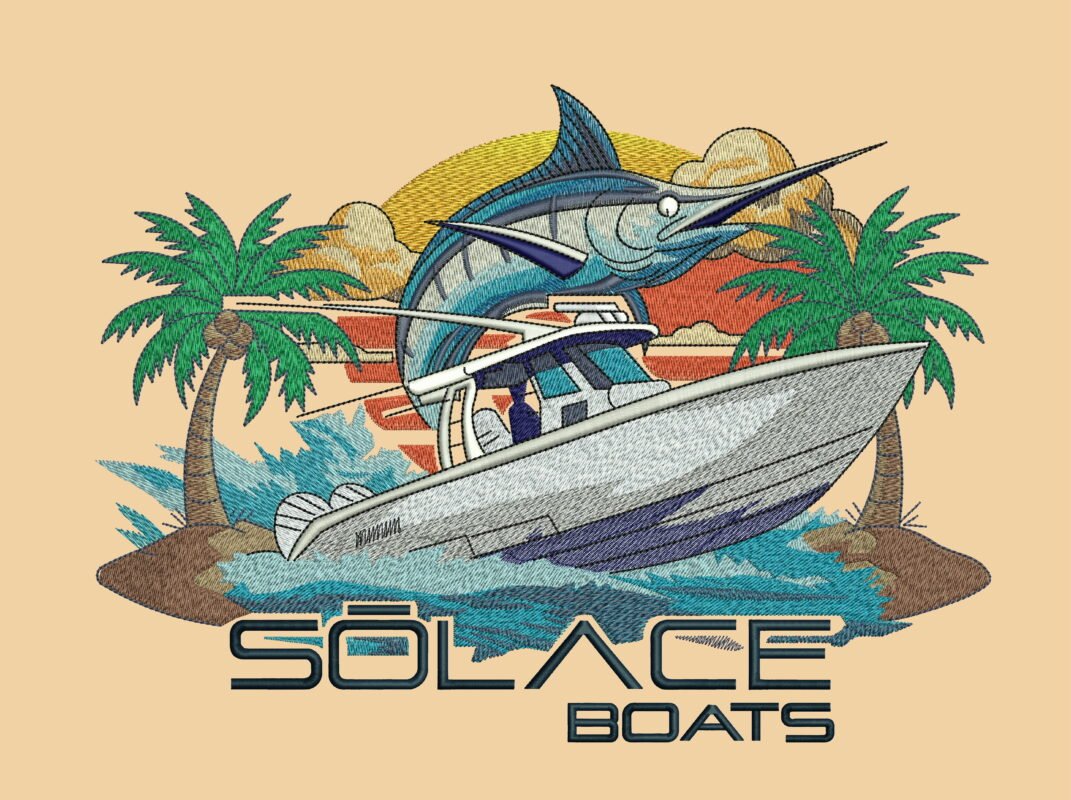
Logo digitizing converts a logo into a sequence of stitches that an embroidery machine can reproduce. The digitizer determines how each part of the artwork will be sewn, including the stitch direction and the order of embroidered elements.
The process requires decisions about the finished physical design. A narrow outline may need a different stitch treatment from a broad area of colour. Lettering must be assessed at its actual embroidery size.
Your original artwork provides the reference. The fabric and intended placement determine how that artwork should be translated into stitches.
Logo Digitizing for Different Applications
Left Chest Logos
Left chest embroidery often places a detailed business logo within a limited area. Company names and smaller text must remain distinct without excessive stitch density. We prepare logos for polo shirts and workwear according to the available space. Where a small tagline cannot reproduce clearly, we discuss an adjustment before digitizing.
Cap and Hat Logos
Cap embroidery requires attention to the shape and construction of the headwear. A centre seam can affect details that cross the front panel, while the curved surface introduces placement constraints. Provide the cap style with your artwork. A file intended for a flat garment may need changes before it is suitable for a cap.
Jacket Back Logos
Larger logos allow more detail, but broad embroidered areas require careful stitch planning. Density must be considered alongside the weight and behaviour of the garment. We prepare jacket back files at the requested size. Fill directions are selected according to the shapes in the artwork and the intended appearance.
Small Logos and Lettering
Compact logos can contain details that are difficult to reproduce with thread. Narrow gaps may close, and closely spaced characters can become unclear. We assess the smallest elements before work begins. Any proposed simplification is explained so you can decide whether it suits your brand requirements.
3D Puff Logos
Raised embroidery is suitable for selected logo elements, particularly substantial lettering and bold shapes. The artwork needs enough space for stitches to cover and secure the foam. Send the logo with a note identifying which areas should appear raised. We will assess the design and explain where changes may be necessary.
Patches and Badges Logos
A patch logo must fit within its finished dimensions and leave sufficient space for the intended border. Fine detail requires particular attention when the patch is small. We prepare the embroidered elements according to your patch construction. Include the base material and edge requirements with your request.
Native PXF for Pulse Embroidery
Native PXF files are available for customers who require an editable design for Pulse embroidery software. State your Pulse version and editing requirements before ordering. Compatibility and the required deliverables can then be confirmed with your quotation.
How We Prepare Your Logo
Artwork Assessment
We review the logo at its intended embroidery size. This establishes whether the lettering is clear enough and whether small details require adjustment. If the reference image is blurred, a clearer version may be needed. Original artwork is particularly useful when the design contains fine outlines or closely spaced text.
Stitch Planning
Different areas of a logo may require different stitch types. The choice depends on their dimensions and the appearance you want to achieve. Underlay and density are considered in relation to the stated fabric. The stitch sequence is also planned to manage the transitions between design elements.

9999+
Orders Delivered

987+
Orders in Process

67+
Digitizers Available

99%
Customers Satisfied
Preserving Your Logo’s Identity in Thread
Logo size and stitch count. More stitches mean more digitizing time. A four inch chest logo takes more work than a two inch one.
Detail and small text. Fine detail and tiny taglines take careful manual work, which the quote reflects.
Number of thread colors. Each color adds thread changes and planning. Simplifying a busy logo often sews better and costs less.
Size specific versions. A logo set for polo, jacket, and cap is three tuned files, not one file stretched three ways, and each version is quoted on its own.
Turnaround needs. Standard timing keeps the price down. If you ever need a true rush, ask and we will quote it honestly.
Simple, Flat Quotes
Files arrive digitally, there is no shipping cost and no courier to wait on.
Who Orders Our Logo Digitizing Services
Not every design sews the same way. A left chest logo needs different settings than a full back design, and a cap needs different settings than a flat jacket. Our digitizing services cover the jobs shops ask for most.
Small businesses
Your logo on polos and jackets makes a two person shop look established, and we turn your existing logo into stitch files without the agency price tag.
Embroidery shops
You run the machines and keep the customers. Send us client logos and get back clean files, with a free mockup to show before production.
Promotional product companies
Client logos turned into stitch files that sew well on polos, tote bags, and more, with thread colors matched to each brand.
Corporate workwear suppliers
Uniform programs with one consistent logo across shirts, jackets, and caps, digitized once and reused across the whole program.
Schools and teams
Mascots and crests digitized for jackets, caps, and spirit wear, with small text kept legible at every size.
Logo Digitizing FAQs
Close, but thread is not pixels. Gradients become solid colors, tiny details get simplified, and very small text may need enlarging. That is why a person redraws your logo by hand. Your free mockup shows how the stitched logo will look before you approve it.
Yes. A vector file is the best starting point, but we digitize from JPGs, PNGs, and clear photos just as happily. If your file needs cleanup before it can be digitized, we will tell you before we quote, so there are no surprises.
Standard block lettering stays readable down to about a quarter inch tall, and taglines usually need to be larger. If your tagline is too small to sew cleanly, we will flag it during the quote and suggest the smallest size that holds up in thread.
Yes. We convert your brand colors to the closest thread shades and show them in your free mockup. If an exact match is not possible in thread, we pick the closest shade and tell you before production, so there are no surprises.
One artwork can, but one stitch file should not. Each garment needs its own size specific version with density and pathing tuned for that fabric and curve. We build these as a logo set, so your brand looks consistent everywhere it appears.
Every logo is quoted flat based on size, stitch count, detail, and versions needed, so you know the exact price before we begin. Our minimum order is $10, stated clearly in every quote. No surprise fees after you approve.
Then we fix it. Every order includes revisions, and your free mockup lets you catch issues before production. Tell us your machine brand and fabric when you order, and send a photo of any problem sew out so we can adjust precisely.
Most logos are digitized within 3 to 6 hour of artwork approval. Your free mockup usually arrives first, so you can approve the look early. If you have a firm deadline, tell us up front and we will give you an honest answer about whether we can meet it.